At isang maabong Miyerkules. Heto ang isang bagong tula ni Becky Añonuevo
tungkol at para sa ilang "academicians" sa isang unibersidad
na patuloy na nagmamarunong, eh hanggang ngayon nama'y nakakalimutan
pa ring mag-evolve. Isang meditasyon hango sa tulang "Postscript"
ni Rolando Tinio.
POSTSCRIPT SA POSTSCRIPT
Akala ko rin ay tumatagos ang iyong mga tula
Sa mga diyos-diyosang
Nakatuntong sa kalabaw,
Pero palibhasa’y latak ang utak,
O patak-patak,
Paano ka nga maiintindihan?
Ay, kung maririnig mo lang
Wala pa ring puknat ang tralala-twang
Hayun sa entablado, bigay-todo sa mikropono,
Kagagaling naman ng mga hinayupak
Na inglesero in fairness
wala nga lang laman
(ang high notes at falsetto)
sandamakmak
ang jargon lexicon kotong!
sa kaliwa’t kanang kumperensiya
national regional international
Cathedral for critical discourse analysis
Asian readers negotiating meaning and identity
Hyper-realities hegemony worksheets
Context, culture, and communication
(subtitle, fading effect: cheers for call centers)
Sheesh kulang na lang naka-tutu ang mga titulo, a-one!, a-two!
At nakaliyad patingkayad na pumasok
Sa background music na el bimbo
at kung puwede lang under the ocean
or over 47 Ursa Marjoris B
at ano pang planetoid Mathilde
hindi talaga makaliligtas sa mga organizers de-kalibre,
aba, karapat-dapat silang tawaging doktor at mga maestro,
kung hindi ba naman,
nahilo ang mga delegado sa pagparoo’t parito
sa world-class campus (na ang tanging sakit
ay obesity sa traffic, just try counting the cars),
at mayroon nga palang mapa!
E ba’t hindi ninyo naman binasa!
Di bale may meryenda, tatlong piranggot
Na tasty na may palamang ala-pimiento, o itlog.
Take note, limang libo, Rolando,
LIMANG LIBONG PISO (P5.000.00) ang ibinayad
Ng mga guro mula katipunan hanggang cotabato
At kailangan kaming magtaka,
magmakaawa sa balewalang inakala:
Ang tanging naiuwi ay sertipiko,
Pero paano kami mag-eecho?
Rebecca T. Añonuevo
Pebrero 18, 2007
Wednesday, February 21, 2007
Saturday, February 17, 2007

Monday, February 12, 2007
BLOG is short for BALROG

I'm starting a column for T3 Magazine this coming March. Below is the first, unedited version of the article.
The View From Vista (Or Why You Shouldn’t Upgrade Your PC Just Yet)
Joel M. Toledo
A friend texted me a few days ago, asking for advice re: building up a new system. He needed a new sleek hardware; saying he can’t wait to own a Windows Vista-ready PC, having probably been “privy to” (he’s a law student) all the hype that surrounds the much-awaited successor of Windows XP.
And who in his right computer-savvy mind wouldn’t be excited? Windows Vista promises a plethora of software features that would make one drool. The view from Vista is a definite sensory assault, in all probability marking a new age in computer systems.
Still, I simply told my would-be-lawyer friend, not to even bother with an upgrade. Sure, he has his plausible arguments as to obtaining a dual-core processor, a bigger hard drive, A DVD-burner, and newer RAM. But the bigger issue really is his willingness to settle for a mid-range video card—you know, that square-ish graphics contraption that non-gamers often take for granted. And which is actually the heart of this column’s argument.
My friend says he’s getting a 7600GT card, one of graphics developer giant NVidia’s touted products in the recent year. Any other time, I would not have hesitated recommending it; heck, it’s powerful and rare: certainly not often bundled into most pre-assembled systems nowadays. Moreover, it’s usually a per-order basis card, not readily available in your neighborhood computer hardware shops.
Ironically, the 7600GT is relatively cheap, priced in hardware warehouses at about six to seven thousand Pesos. And if my friend had more dough to spend, I would have suggested he get a 7900GT card or its equivalent from ATI, NVidia’s graphics competitor. The usual price range for these supposedly high-end cards are in the 10K to 15++K level. And again, most likely per-order basis, unless you really bother to scour the Gilmore row of shops in San Juan.
Ridiculous, one might say (I can already see readers rolling your eyes, hear the collective groan), for a simple video card. Why, you can get a really nice appliance for that kind of money, a large TV, an LCD monitor, an Xbox 360 even. In the past, high-end graphics cards are mostly the ludicrous contraptions of fanatic gamers and the powertools of video editors.
Well, not any more.
This is probably the first time in the history of computing that you can truly take the word from gamers (and, uh, former game reviewers) and NOT upgrade yet. While the wicked dual-core processors and next-generation RAMs and motherboards are already out in the market, the missing link can simply and ultimately be summarized in one word:
DirectX10.

The video card technology has made significant leaps toward PC independence in the past few years, giving birth to the now-popular term Graphics Processing Unit (GPU). Now, this ideal severance is almost completely realized, with DirectX10 technology—
arguably Windows Vista’s ultimate attraction—allowing for dedicated GPU utilization.
All in all, it is not a good idea to upgrade yet because of two basic points: one, the general lack of DirectX10-ready software; and two, incredibly expensive hardware (and the lack thereof) to truly harness Windows Vista’s power (Think P25K. And that’s just for NVidia’s cheapest DirectX10-ready 8800 series cards). More importantly, no amount of Windows XP tweaking will let you experience DirectX10’s beauty, as Microsoft will not let this technology trickle back to your aging XP operating systems.
The bottomline? Yes, by all means you may upgrade to a Vista-ready system now, but at this point it will most likely be temporary, transitory and, worse, a waste of your money. Wait a little bit for the technology to cheapen to sane price ranges and for the support to multiply. Don’t expect your Vista experience to open up to lovely and wondrous DirectX10 sceneries just yet. Keep those Windows latches firmly in place and preserve those precious XP points.
If only for a little while longer.
***
at syemps...


Wednesday, February 07, 2007
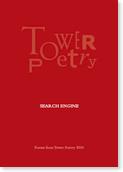
Search Engine
Whose algorithms swim the ocean
of a single word, returning pages
fished like coelacanths and pearls
from the server's architectured soul:
in the machine’s drowned palaces, among
the gates and lattices of silicon
its terms have cradled satellites and saints,
touched their coronas in the disc’s mosaic.
Here mathematics gropes in parley
with the unknown, its hands entwined
in filigrees of light, tilting the net
over the imagination’s edge
into the dark: and in its snarls are hung
the numbered stars, the deftly rising moon.
Meirion Jordan
Wasak!
* From the new pamphlet,
Search Engine: Poems from Tower Poetry 2006.
of a single word, returning pages
fished like coelacanths and pearls
from the server's architectured soul:
in the machine’s drowned palaces, among
the gates and lattices of silicon
its terms have cradled satellites and saints,
touched their coronas in the disc’s mosaic.
Here mathematics gropes in parley
with the unknown, its hands entwined
in filigrees of light, tilting the net
over the imagination’s edge
into the dark: and in its snarls are hung
the numbered stars, the deftly rising moon.
Meirion Jordan
Wasak!
* From the new pamphlet,
Search Engine: Poems from Tower Poetry 2006.

Monday, February 05, 2007

Tuesday, January 30, 2007
Stephen Burt Reviews Averno by Louise Glück
Averno is Louise Gluck's best book in at least ten years, perhaps her best since The Wild Iris (1992). Like almost all her books, it mixes curt fragments of autobiography, apothegmatic claims about disappointment and unfulfillment in human life generally, and analogies from familiar myth: in this case, the myth of Persephone, whose descent into Hades, and consequent winter (Italian "averno"), the poet sets against (a) her own midlife fears about death, (b) her thoughts on the tenacious, frightening bonds between mothers and daughters, and (c) the story of a modern girl, an anti-Persephone of sorts, who—through carelessness or arson—burns a wheat field to ash.
These deflated lyric utterances possess the starkness of her other recent books (such as 1999's Vita Nova) but almost none of their self-pity, and none of their risky, apparently thin consolation. "I thought my life was over," Vita Nova concluded, "then I moved to Cambridge," that is, Cambridge, Massachusetts. No wonder Americans pay such high rent to live there.
Such responses, provoked whenever a poet does not quite transform her life into art, should not arise from Averno, which provokes astonishment, and perhaps a little fear, instead. In this book, when a life is over, it is truly over: "these things we depend on," the first poem says, "they disappear.// What will the soul do for solace then?... Maybe just not being is simply enough,/ hard as that is to imagine."
Averno, like many retellings of Persephone's story, considers how hard we find it to leave any prior world (childhood, say, or youth, or parenthood) behind. Gluck’s retelling stands out for the nearly impersonal harshness with which she examines the actors, and especially Demeter, the grieving mother. "The goddess of the earth/ punishes the earth—this is/ consistent with what we know of human behavior," she concludes. Another poem advises: "the tale of Persephone... should be read/ as an argument between the mother and the lover--/ the daughter is just meat." The closer we get, Gluck suspects, to the primal attachments—mother-daughter, wife-husband, lover-beloved-- the less humane we are to one another, the more we cease to care what our “partners” want.
Nor is that her only chilling claim. "I remember the word for chair,/ I want to say—I'm just not interested anymore." So the title poem states: few poets save Plath have sounded so alienated, so depressed, so often, and rendered that alienation aesthetically interesting. Gluck's self-editing, her care that each line add (or subtract) something from the line before, sets her above her bevy of imitators. As with Alberto Giacometti, her closest analogue in the visual arts, Gluck's technique seems to have evolved out of her bleak, subtractive moods. Her happiest claims, her most attractive images, come in for grim treatment as soon as they appear. Look what she does to the agreeable melancholy in this succession of images: "My childhood, closed to me forever,/ turned gold like an autumn garden" (here it comes) "mulched with a thick layer of salt marsh hay."
Such effects notwithstanding, Gluck's usual sources of surprise and variety are not images but syntax, line shape, and tone: poems shift from vaunting defiance to curdled self-hate in the space of a single phrase. Gluck can also stake everything on the truth of her abstract utterances: "It is true there is not enough beauty in the world./ It is also true that I am not competent to restore it./ Neither is there candor, and here I may be of some use."
That candor about owes something to Gluck's early and serious psychoanalysis, which (as she explained in an essay, collected in 1994's Proofs & Theories) served her almost as other writers have been served by universities. The psychoanalytic situation, of course, asks the analysand to say, without rehearsal, whatever seems most important, and identifies importance with hiddenness, shock, aggression, unfairness, with whatever emotions we usually conceal.
So does Gluck. What psychoanalysis does not do, what Gluck has used her lyric concision to do, is to judge those unfair, "inappropriate," self-revelations, and in doing so to give them shape, or shapes: as in the psychoanalytic series of sessions, organized into episodes and groups, Gluck's verse-paragraphs comprise sets and series, poems and groups of poems, sets within sets, such as the six-part, eleven-page poem “October,” each part and no part apparently final.
These bleak sequences include an equally bleak view of the life course. Lives in most art works have, in Yeats' phrase, "character isolated by a deed," but lives in Gluck have no deeds, no moments of decision, only a remembered "before" and a startled, stripped down "after," with "the field parched, dry,/ the deadness in place already." In a poem called "The Myth of Innocence," Persephone realizes that neither an account in which she says "I was abducted," nor an account in which she says "I offered myself... I willed this," fits: the name for her life, for all lives, is neither victimhood nor heroic choice, but impersonal fate, which we can resent indefinitely, or else resign ourselves to living out.
Gluck's bracing transitions and her scary omissions, her sudden claims and terse rejoinders, will not please every reader, but what could? She has rejected most of the effects by which other poets depict life's attractions, or its distractions: "Someone like me," Gluck says, "doesn't escape." Even the oldest tradition of seasonal lyric contains, for her, misleading consolation: "Spring will return, a dream/ based on a falsehood:/ that the dead return." Is such an account of life incomplete? It is: it is also beautiful in itself, and it makes a startling corrective to the hopes embodied by almost everything else we are likely to read.
From Tower Poetry
These deflated lyric utterances possess the starkness of her other recent books (such as 1999's Vita Nova) but almost none of their self-pity, and none of their risky, apparently thin consolation. "I thought my life was over," Vita Nova concluded, "then I moved to Cambridge," that is, Cambridge, Massachusetts. No wonder Americans pay such high rent to live there.
Such responses, provoked whenever a poet does not quite transform her life into art, should not arise from Averno, which provokes astonishment, and perhaps a little fear, instead. In this book, when a life is over, it is truly over: "these things we depend on," the first poem says, "they disappear.// What will the soul do for solace then?... Maybe just not being is simply enough,/ hard as that is to imagine."
Averno, like many retellings of Persephone's story, considers how hard we find it to leave any prior world (childhood, say, or youth, or parenthood) behind. Gluck’s retelling stands out for the nearly impersonal harshness with which she examines the actors, and especially Demeter, the grieving mother. "The goddess of the earth/ punishes the earth—this is/ consistent with what we know of human behavior," she concludes. Another poem advises: "the tale of Persephone... should be read/ as an argument between the mother and the lover--/ the daughter is just meat." The closer we get, Gluck suspects, to the primal attachments—mother-daughter, wife-husband, lover-beloved-- the less humane we are to one another, the more we cease to care what our “partners” want.
Nor is that her only chilling claim. "I remember the word for chair,/ I want to say—I'm just not interested anymore." So the title poem states: few poets save Plath have sounded so alienated, so depressed, so often, and rendered that alienation aesthetically interesting. Gluck's self-editing, her care that each line add (or subtract) something from the line before, sets her above her bevy of imitators. As with Alberto Giacometti, her closest analogue in the visual arts, Gluck's technique seems to have evolved out of her bleak, subtractive moods. Her happiest claims, her most attractive images, come in for grim treatment as soon as they appear. Look what she does to the agreeable melancholy in this succession of images: "My childhood, closed to me forever,/ turned gold like an autumn garden" (here it comes) "mulched with a thick layer of salt marsh hay."
Such effects notwithstanding, Gluck's usual sources of surprise and variety are not images but syntax, line shape, and tone: poems shift from vaunting defiance to curdled self-hate in the space of a single phrase. Gluck can also stake everything on the truth of her abstract utterances: "It is true there is not enough beauty in the world./ It is also true that I am not competent to restore it./ Neither is there candor, and here I may be of some use."
That candor about owes something to Gluck's early and serious psychoanalysis, which (as she explained in an essay, collected in 1994's Proofs & Theories) served her almost as other writers have been served by universities. The psychoanalytic situation, of course, asks the analysand to say, without rehearsal, whatever seems most important, and identifies importance with hiddenness, shock, aggression, unfairness, with whatever emotions we usually conceal.
So does Gluck. What psychoanalysis does not do, what Gluck has used her lyric concision to do, is to judge those unfair, "inappropriate," self-revelations, and in doing so to give them shape, or shapes: as in the psychoanalytic series of sessions, organized into episodes and groups, Gluck's verse-paragraphs comprise sets and series, poems and groups of poems, sets within sets, such as the six-part, eleven-page poem “October,” each part and no part apparently final.
These bleak sequences include an equally bleak view of the life course. Lives in most art works have, in Yeats' phrase, "character isolated by a deed," but lives in Gluck have no deeds, no moments of decision, only a remembered "before" and a startled, stripped down "after," with "the field parched, dry,/ the deadness in place already." In a poem called "The Myth of Innocence," Persephone realizes that neither an account in which she says "I was abducted," nor an account in which she says "I offered myself... I willed this," fits: the name for her life, for all lives, is neither victimhood nor heroic choice, but impersonal fate, which we can resent indefinitely, or else resign ourselves to living out.
Gluck's bracing transitions and her scary omissions, her sudden claims and terse rejoinders, will not please every reader, but what could? She has rejected most of the effects by which other poets depict life's attractions, or its distractions: "Someone like me," Gluck says, "doesn't escape." Even the oldest tradition of seasonal lyric contains, for her, misleading consolation: "Spring will return, a dream/ based on a falsehood:/ that the dead return." Is such an account of life incomplete? It is: it is also beautiful in itself, and it makes a startling corrective to the hopes embodied by almost everything else we are likely to read.
From Tower Poetry
Friday, January 19, 2007
2006 Meritage Press Poetry Prize

What a great blessing
to start the year!
Heartfelt thanks to
Ms. Eileen Tabios,
Judge Michelle Bautista
and all the people over at
Meritage Press, San Francisco
for the honor. Congratulations
to the other winners,
Ivy Alvarez
and Marie La Viña,
both close friends,
as well as all the finalists. :)
Saturday, January 13, 2007
Chupacabraz at mag:net January 15 Monday!
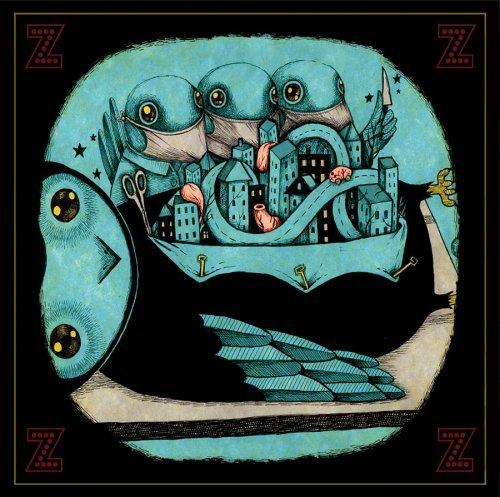
Please come, support us, and Rock Out! This coming monday in mag:net Katipunan. Wasakan starts at 9pm. We'll be playing two sets from the forthcoming album, Release the Evil. Also featuring readings from established and upcoming poets like Jimmy Abad, Allan Pastrana, Angelo Suarez, Arkaye Kierulf, Lourd de Veyra, John Torres, Larry Ypil, and other readers from UP, UST, and Ateneo. If you feel like it, bring a copy of your poems and READ with us during the open mic. No secret handshakes required!
*photo from the cover of the 2005 album, Z by My Morning Jacket (my favorite wasak innovators of the moment)
Saturday, January 06, 2007
Pagluwas Book Launch
January 11, 2007 (Thursday)
7-9 PM
mag:net Katipunan
Plugging! Punta tayo't suportahan si Imo. Tutugtog ang Chupacabraz at Jesus Mafia. Paalis na rin si Imo papuntang Tate sa 13th so isang matinding Despedida na rin ito.
Tara, sakay na! Humaharurot na ang bus. Destinasyon: Kapahamakan.
Binubuo ang Pagluwas ng 52 kuwentong pira-piraso tungkol sa mga pasaherong sumakay ng bus biyaheng Maynila galing Baguio, at nauwi sa isang kakaibang sakuna. Walang nakaligtas at nasugatan. Wala, kahit mga katawan.
Inilalahad din ng Pagluwas ang mga pang-araw-araw na bagay (lipstick, robot na Voltes V, P2150, basketball jersey…) at mga karaniwang buhay bago umalagwa sa kawalan. Bahaging nobela at antolohiya ng mga sumambulat na naratibong nirerepaso ang kahulugan ng kasabihang "tayo ang mga bagay na naiwan" sa iba't ibang antas ng halaga at pagkapansamantala.
_________________________________________
Mala-nobela ang kalipunan ng maiigsing maikling kwento ni Quibilan. Pinamagatang Pagluwas, tila binubuksan nito ang isang puwerto at inihaharap s atin ang maraming daigdig na nagpapakilala ng maraming iba-ibang tauhan at maraming iba-ibang naratibo na ipinauubaya ng anyong dagli.
Kawiliwiling sundan at subaybayan ang mga naratibo, hindi lamang dahil magaan ang kolokyal na wikang ginamit ng awtor kundi dahil eksperto si Quibilan sa pagbitag sa ating kuryosidad bilang mambabasa. Hindi kwentistang nagsusubo sa mambabasa ng mga detalye – dinadala niya tayo sa "wakas" na hindi naman katapusan, at iniiwan tayong tumatahi sa mga retaso ng naratibo ayon sa talas at tabas ng ating sariling mapanlikhang imahinasyon.
Basahin ang Pagluwas at danasin ang maraming buhay na hatid ni Quibilan at angkinin ang mga ito.
BIENVENIDO LUMBERA
National Artist for Literature
________________________________
"Nitong nakaraang 15 taon, kapansin-pansin ang paglabas sa bansa ng mga kuwentong hindi tradisyunal o apropriasyon ng tendensiyang post-modern. Kasama sa tendensyang ito ang PAGLUWAS. Mahusay ang pagkakasulat nito sa pagtalakay sa mumunting problema na may mumunting "pain and agony" ng mumunting buhay. Malay si Quibilan sa halaga ng papel ng mambabasa, sa paghingi niya ng detalye para mapaikli ang kuwento.
"Mahalagang kontribusyon ang PAGLUWAS hindi lamang sa ebolusyon ng kuwento sa Filipino kundi mismo sa kontemporaryong panitikang Filipino."
JUN CRUZ REYES
Premyadong Kuwentista at Propesor ng Panitikan sa UP
_________________________________
"Confirms what we all know: that we are just detritus in a crash of spirits and bodies, trying to find meaning in the aftermath. The coolness of it is that it depicts our inexorable spin to destruction with such poetry."
KARL R. De MESA
Author: Damaged People, Tales of the Gothic-Punk
7-9 PM
mag:net Katipunan
Plugging! Punta tayo't suportahan si Imo. Tutugtog ang Chupacabraz at Jesus Mafia. Paalis na rin si Imo papuntang Tate sa 13th so isang matinding Despedida na rin ito.
Tara, sakay na! Humaharurot na ang bus. Destinasyon: Kapahamakan.
Binubuo ang Pagluwas ng 52 kuwentong pira-piraso tungkol sa mga pasaherong sumakay ng bus biyaheng Maynila galing Baguio, at nauwi sa isang kakaibang sakuna. Walang nakaligtas at nasugatan. Wala, kahit mga katawan.
Inilalahad din ng Pagluwas ang mga pang-araw-araw na bagay (lipstick, robot na Voltes V, P2150, basketball jersey…) at mga karaniwang buhay bago umalagwa sa kawalan. Bahaging nobela at antolohiya ng mga sumambulat na naratibong nirerepaso ang kahulugan ng kasabihang "tayo ang mga bagay na naiwan" sa iba't ibang antas ng halaga at pagkapansamantala.
_________________________________________
Mala-nobela ang kalipunan ng maiigsing maikling kwento ni Quibilan. Pinamagatang Pagluwas, tila binubuksan nito ang isang puwerto at inihaharap s atin ang maraming daigdig na nagpapakilala ng maraming iba-ibang tauhan at maraming iba-ibang naratibo na ipinauubaya ng anyong dagli.
Kawiliwiling sundan at subaybayan ang mga naratibo, hindi lamang dahil magaan ang kolokyal na wikang ginamit ng awtor kundi dahil eksperto si Quibilan sa pagbitag sa ating kuryosidad bilang mambabasa. Hindi kwentistang nagsusubo sa mambabasa ng mga detalye – dinadala niya tayo sa "wakas" na hindi naman katapusan, at iniiwan tayong tumatahi sa mga retaso ng naratibo ayon sa talas at tabas ng ating sariling mapanlikhang imahinasyon.
Basahin ang Pagluwas at danasin ang maraming buhay na hatid ni Quibilan at angkinin ang mga ito.
BIENVENIDO LUMBERA
National Artist for Literature
________________________________
"Nitong nakaraang 15 taon, kapansin-pansin ang paglabas sa bansa ng mga kuwentong hindi tradisyunal o apropriasyon ng tendensiyang post-modern. Kasama sa tendensyang ito ang PAGLUWAS. Mahusay ang pagkakasulat nito sa pagtalakay sa mumunting problema na may mumunting "pain and agony" ng mumunting buhay. Malay si Quibilan sa halaga ng papel ng mambabasa, sa paghingi niya ng detalye para mapaikli ang kuwento.
"Mahalagang kontribusyon ang PAGLUWAS hindi lamang sa ebolusyon ng kuwento sa Filipino kundi mismo sa kontemporaryong panitikang Filipino."
JUN CRUZ REYES
Premyadong Kuwentista at Propesor ng Panitikan sa UP
_________________________________
"Confirms what we all know: that we are just detritus in a crash of spirits and bodies, trying to find meaning in the aftermath. The coolness of it is that it depicts our inexorable spin to destruction with such poetry."
KARL R. De MESA
Author: Damaged People, Tales of the Gothic-Punk
Friday, December 29, 2006
To All Caracoa 2006 Contributors
Just a reminder to all the 25 contributors whose poems came out in the 2006 Silver Issue. If you have not gotten your complimentary copies yet, please email me your mailing address (ramblingsoul@yahoo.com). The people from the PLAC will send you your copies. But if you are anywhere near the Katipunan area, I can meet you early next year and hand over your copies. Thanks.
By the way, Caracoa 2006 is being sold in mag:net Katipunan and will be available in Aeon Books by January. It's only P100. Bili naman kayo. Salamat at Manigong Bagong Taon sa lahat!
By the way, Caracoa 2006 is being sold in mag:net Katipunan and will be available in Aeon Books by January. It's only P100. Bili naman kayo. Salamat at Manigong Bagong Taon sa lahat!
Wednesday, December 27, 2006
Desiderio, The Afflicted
by Karl De Mesa
Had he been lucid he would have been the first to affirm that, yes, his state did not lack for exegetes. If only he could remember which superlative went where and belonged to which field, he would have had the time of his life.
One thing was certain: he was no longer among the lucid.
Often, he would wake to find his sheets soaked in blood. He would rush to the bathroom and wash himself until the small soap they gave him every morning was reduced to the size of his pinky.
His screams were routinely ignored. This only increased his rage. When the fury reached breaking point he would toss himself against every surface until he forced himself to calm down again, forced himself to befriend the walls and the floor and the bed. “Look! Look how I bleed!” he would declare and he would raise his wrists and try to lift his feet as well.
Of course the wounds were not there. They always retreated from day, dissolved by
the same light that had transformed him. It was different when night came. If only they could see him at such times, he would show them and then they would see, they would acknowledge his apotheosis.
He doesn’t remember what he had first prayed for, but he does remember that he had clasped his hands and bowed his head to the Lord ever since he got here. Somewhere down the line he became lost in devotion. The light, engulfing him, showed him the wickedness of his heart, the wickedness of those around him.
That day, his change could not be denied. To himself, that is.
This change could only be seen from within. Its mark on his flesh, the night wounds, was a continuing reminder that his doubts still lay claim to him in some small measure. Such a testament was insufficient for the nurses and doctors. Still, there was no other option. So he continually called to them when the wounds came, hoping they would see, hoping they would recognize. Until then they insisted he swallow pills and commanded electricity to heal him.
In this place light behaved erratically, shadows fell where they shouldn’t -- the chiaroscuro of things was reversed. Medicine, that bitter cocktail, was the only clock by which he judged the time.
Today, there was still enough light to discern the person who came in with the 6PM cup of pills. But there was one glaring mistake: the woman had become a man. This was not logical. Perhaps it was another trick of his gaolers? If it was, it was by far the most ingenious.
“Desi,” the man who had entered said, and approached.
He didn’t answer.
“Desiderio de la Cruz,” the man looked at a rectangular metal tablet in his hand.
Desi did not acknowledge him. He continued to stare at the bedpan at the foot of his bed. It was in the man’s way, but it was also concealed since it was colored so much like the off-white of the floor and the walls. The man would surely stumble on it or, if Desi was lucky, trip and break his nose. So far it didn’t look like he had noticed.
Although there was a bathroom in Desi’s room he had insisted they give him a bedpan –a steel and aluminum arinola. He had a weak stomach and his bowels were weaker still. Sometimes he didn’t reach the toilet before his guts burst. To force them to give him a bedpan he had taken to defecating on the floor. This proved to them his urgent need.
The man stood fuddled over his metal tablet. Today, Desi knew there were no feces inside the bedpan. It was covered, yes, since he had just pissed there a few minutes ago, piss yellow and rank from this afternoon’s pineapple juice.
He made a bet for the next minute: the man would notice the bedpan and sidestep it or the bedpan would remain unnoticed. It would take the man approximately five steps to reach the foot of the bed from where he stood.
Desi rooted for the bedpan.
Meanwhile, the man continued to look at his metal tablet as he walked forward. “Desiderio, how do you feel today? I’m your new doctor, my name is Dr. Herodya. Sorry for the confusion but management says we better rotate with you every month since you don’t seem to be responding to treatment. Anyway, I have a nice glass of gin-buko right here.” The Doctor shook the plastic cup in his hand where pills rattled within. “Hello? Do you know where you are, Desi?”
The Doctor took a step forward. Outside, the sun was going down at an alarming speed. It would be dark before the bet could be completed.
“Do you remember how you got here? Why you’re here? Anything at all?”
Another step.
Desi’s eyes widened as he mentally urged the Doctor to walk faster. The Doctor stopped.
“Desi? Can you hear me?”
No! No! Don’t stop! Take another step! He cleared his throat, “I hear. Desi cannot.”
“Oh? Why not? You have ears. Don’t you, Desi?”
It seems he must take a hand in the proceedings, “I have, but I am not he. He was a sinful man.”
The Doctor took a step forward. He stopped a few inches from the bedpan. “Then who are you?”
He shook his head and said to the Doctor, “He is not I.”
“Who are you?” The Doctor asked again, “Who are you if not Colonel Desiderio de la Cruz?”
The enemy clearly had the upper hand but Desi’s will was stronger. Was he not a soldier of the Lord, a commander who served the glorious Host? He knitted his brows and willed with all his might. Willed the doctor to lift his foot and put it in front of the other. Walk, Doctor, walk! The Doctor took a step forward and stumbled right into the bedpan. He knocked over the cover and spilled piss all over his polished leather shoes, right through to his white socks.
“Shit!” the Doctor said in a surprisingly crisp tone.
Doctor Herodya cursed again as Desi laughed. He sat back on the bed. He held his belly and enjoyed the mirth. Sunlight completely faded and the light on the ceiling automatically turned itself on.
The light. The memory of living and dying for a brief second. The pull of a trigger. Only God could have saved Desi’s men. Only God could have made the bullet ricochet across his helmeted temple, knocking him from the path of the rocket that quickly followed and allowing him to survive. To survive even as the shrapnel and explosion cut to ribbons the Sergeant and three Privates behind him. His men. He had ordered them to get as much cover as they could, but the terrorists knew just where to hit them, and just when. The enemy. They had been waiting.
He wasn’t God, you know. No. Not then. Not yet.
“You know who I am,” he said to the Doctor.
Desi cast aside the blanket and stretched out his legs to show him the red pinpricks on his feet that oozed blood. He held up his arms to display his twin, bleeding wrists. Desi wondered if he had the halo around his head as well. He would have given anything for a mirror but the awed, horrified look in the Doctor’s eyes was enough.
Meanwhile, the Doctor was about to burst from an inner quake. The cup of pills in his hand rattled to a rapid beat. It began from his piss-soaked shoes and rapped its percussion against his immaculate white pants, his ballooning torso, up to his tiered and three-chinned face. The tremor set the glasses on his nose askew. It knocked at his skull, whipping his thinning hair from side to side as if he was being slapped. Unable to contain the mystery before him, the Doctor averted his eyes.
He rushed out of the room, knocking over the bedpan again. He threw aside the cup as he opened the door. Pills scattered. The Doctor’s footsteps and his scream echoed down the corridor to clamor with the other petitions in the dark.
Desi put down his arms and smiled at the bedpan. It lay on its side, its cover a foot away.
“You won,“ he told it.
It wobbled to say that, indeed, it had.
***
for discussion, E103
Had he been lucid he would have been the first to affirm that, yes, his state did not lack for exegetes. If only he could remember which superlative went where and belonged to which field, he would have had the time of his life.
One thing was certain: he was no longer among the lucid.
Often, he would wake to find his sheets soaked in blood. He would rush to the bathroom and wash himself until the small soap they gave him every morning was reduced to the size of his pinky.
His screams were routinely ignored. This only increased his rage. When the fury reached breaking point he would toss himself against every surface until he forced himself to calm down again, forced himself to befriend the walls and the floor and the bed. “Look! Look how I bleed!” he would declare and he would raise his wrists and try to lift his feet as well.
Of course the wounds were not there. They always retreated from day, dissolved by
the same light that had transformed him. It was different when night came. If only they could see him at such times, he would show them and then they would see, they would acknowledge his apotheosis.
He doesn’t remember what he had first prayed for, but he does remember that he had clasped his hands and bowed his head to the Lord ever since he got here. Somewhere down the line he became lost in devotion. The light, engulfing him, showed him the wickedness of his heart, the wickedness of those around him.
That day, his change could not be denied. To himself, that is.
This change could only be seen from within. Its mark on his flesh, the night wounds, was a continuing reminder that his doubts still lay claim to him in some small measure. Such a testament was insufficient for the nurses and doctors. Still, there was no other option. So he continually called to them when the wounds came, hoping they would see, hoping they would recognize. Until then they insisted he swallow pills and commanded electricity to heal him.
In this place light behaved erratically, shadows fell where they shouldn’t -- the chiaroscuro of things was reversed. Medicine, that bitter cocktail, was the only clock by which he judged the time.
Today, there was still enough light to discern the person who came in with the 6PM cup of pills. But there was one glaring mistake: the woman had become a man. This was not logical. Perhaps it was another trick of his gaolers? If it was, it was by far the most ingenious.
“Desi,” the man who had entered said, and approached.
He didn’t answer.
“Desiderio de la Cruz,” the man looked at a rectangular metal tablet in his hand.
Desi did not acknowledge him. He continued to stare at the bedpan at the foot of his bed. It was in the man’s way, but it was also concealed since it was colored so much like the off-white of the floor and the walls. The man would surely stumble on it or, if Desi was lucky, trip and break his nose. So far it didn’t look like he had noticed.
Although there was a bathroom in Desi’s room he had insisted they give him a bedpan –a steel and aluminum arinola. He had a weak stomach and his bowels were weaker still. Sometimes he didn’t reach the toilet before his guts burst. To force them to give him a bedpan he had taken to defecating on the floor. This proved to them his urgent need.
The man stood fuddled over his metal tablet. Today, Desi knew there were no feces inside the bedpan. It was covered, yes, since he had just pissed there a few minutes ago, piss yellow and rank from this afternoon’s pineapple juice.
He made a bet for the next minute: the man would notice the bedpan and sidestep it or the bedpan would remain unnoticed. It would take the man approximately five steps to reach the foot of the bed from where he stood.
Desi rooted for the bedpan.
Meanwhile, the man continued to look at his metal tablet as he walked forward. “Desiderio, how do you feel today? I’m your new doctor, my name is Dr. Herodya. Sorry for the confusion but management says we better rotate with you every month since you don’t seem to be responding to treatment. Anyway, I have a nice glass of gin-buko right here.” The Doctor shook the plastic cup in his hand where pills rattled within. “Hello? Do you know where you are, Desi?”
The Doctor took a step forward. Outside, the sun was going down at an alarming speed. It would be dark before the bet could be completed.
“Do you remember how you got here? Why you’re here? Anything at all?”
Another step.
Desi’s eyes widened as he mentally urged the Doctor to walk faster. The Doctor stopped.
“Desi? Can you hear me?”
No! No! Don’t stop! Take another step! He cleared his throat, “I hear. Desi cannot.”
“Oh? Why not? You have ears. Don’t you, Desi?”
It seems he must take a hand in the proceedings, “I have, but I am not he. He was a sinful man.”
The Doctor took a step forward. He stopped a few inches from the bedpan. “Then who are you?”
He shook his head and said to the Doctor, “He is not I.”
“Who are you?” The Doctor asked again, “Who are you if not Colonel Desiderio de la Cruz?”
The enemy clearly had the upper hand but Desi’s will was stronger. Was he not a soldier of the Lord, a commander who served the glorious Host? He knitted his brows and willed with all his might. Willed the doctor to lift his foot and put it in front of the other. Walk, Doctor, walk! The Doctor took a step forward and stumbled right into the bedpan. He knocked over the cover and spilled piss all over his polished leather shoes, right through to his white socks.
“Shit!” the Doctor said in a surprisingly crisp tone.
Doctor Herodya cursed again as Desi laughed. He sat back on the bed. He held his belly and enjoyed the mirth. Sunlight completely faded and the light on the ceiling automatically turned itself on.
The light. The memory of living and dying for a brief second. The pull of a trigger. Only God could have saved Desi’s men. Only God could have made the bullet ricochet across his helmeted temple, knocking him from the path of the rocket that quickly followed and allowing him to survive. To survive even as the shrapnel and explosion cut to ribbons the Sergeant and three Privates behind him. His men. He had ordered them to get as much cover as they could, but the terrorists knew just where to hit them, and just when. The enemy. They had been waiting.
He wasn’t God, you know. No. Not then. Not yet.
“You know who I am,” he said to the Doctor.
Desi cast aside the blanket and stretched out his legs to show him the red pinpricks on his feet that oozed blood. He held up his arms to display his twin, bleeding wrists. Desi wondered if he had the halo around his head as well. He would have given anything for a mirror but the awed, horrified look in the Doctor’s eyes was enough.
Meanwhile, the Doctor was about to burst from an inner quake. The cup of pills in his hand rattled to a rapid beat. It began from his piss-soaked shoes and rapped its percussion against his immaculate white pants, his ballooning torso, up to his tiered and three-chinned face. The tremor set the glasses on his nose askew. It knocked at his skull, whipping his thinning hair from side to side as if he was being slapped. Unable to contain the mystery before him, the Doctor averted his eyes.
He rushed out of the room, knocking over the bedpan again. He threw aside the cup as he opened the door. Pills scattered. The Doctor’s footsteps and his scream echoed down the corridor to clamor with the other petitions in the dark.
Desi put down his arms and smiled at the bedpan. It lay on its side, its cover a foot away.
“You won,“ he told it.
It wobbled to say that, indeed, it had.
***
for discussion, E103
Monday, December 18, 2006
Caracoa 2006: The Silver Issue (UPDATED)
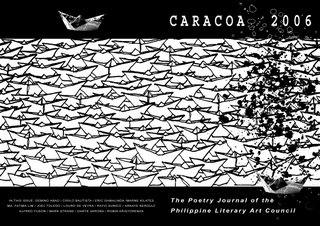
WHAT: Caracoa 2006: The Silver Issue Book Launch
WHEN: Friday, December 22, 2006 7pm
WHERE: mag:net Katipunan
CARACOA REVIVAL ON PLAC's 25th YEAR
Caracoa: The Poetry Journal of the Philippine Literary Arts Council
(PLAC), sees a revival after a ten-year hiatus with the launch in
Mag:net Katipunan at 7pm this Friday, Dec. 22, of Caracoa 2006: The Silver
Issue.
The younger generation of outstanding poets writing in English took the
initiative to revive what had been the longest running poetry journal
in the country as well as in Asia, which was started in the early 1980s
when it came out regularly as a quarterly.
The last issue, however, was produced in 1996, after which Caracoa
became moribund. Poets Joel Toledo, Lourd de Veyra, Angelo Suarez and Mookie
Katigbak sought permission from two of PLAC's founders, Gemino H. Abad
and Alfred A. Yuson, for the revival, for which the young poets
constituted themselves into an editorial board.
25 fresh voices comprise the contributors for the revival issue, which
also commemorates PLAC's 25th anniversary.
These contributors will help launch Caracoa 2006 with a reading of
their featured poems.
The Caracoa journal designer Pancho Villanueva will exhibit five of his
artworks, three of which are featured in the revival issue, on the
night of the reading-launch.
A couple of freshly minted CDs — of poetry readings conducted by the
original PLAC crew in the 1980s, including Abad, Cirilo F. Bautista,
Alfrredo Navarro Salanga, Ricardo M. de Ungria and Yuson, will also be
made available during the event.
The poets' band Chupacabraz, composed of Israfel Fagela, Joel
Toledo, Mikael Co and Carljoe Javier, will also perform after the reading.
Caracoa's revival was made possible with the help of David Guerreo,
Esq.of BBDO Guerrero Ortega.
(Mag:net Cafe is located along Katipunan Ave, Quezon City fronting
Miriam and Ateneo beside ibank and Rustan's with Tel 9293191 or visit
www.magnet.com.ph)
Caracoa 2006 features poems from 25 poets:
1. Alexander Agena
2. Jim Pascual Agustin
3. Ivy Alvarez
4. Oscar Alvarez
5. Glenn Atanacio
6. Amado Bajarias
7. Luis Cabalquinto
8. Mark Cayanan
9. Frank Cimatu
10. Mikael De Lara Co
11. Vincent Coscolluela
12. Adam David
13. Raymond de Borja
14. Rodrigo dela Peña
15. Israfel Fagela
16. Eduardo Geronia, Jr.
17. Luisa Igloria
18. Ken Ishikawa
19. Arkaye Kierulf
20. Sarge Lacuesta
21. Paolo Manalo
22. Wilfredo Pascual
23. Jose Ocampo Reyes
24. Naya Valdellon
25. Joel H. Vega
Finally, we're setting sail! Everyone's invited.
If you're a contributor, please bring poems to read.
Tuesday, December 05, 2006
¾
Certainly not as complex as math, and much simpler
than metaphor. Just something visual and comprehensible
and somewhat circular, like a pie from childhood
and how we had wanted it so badly, loving the challenge
a sister or brother posed, everything in favor of
that youthful right to the bigger share.
We call it greed every so often, getting old,
watching children fight over some silly object.
Common competition, we say, and how back then
we should always win. But how hard can it be
to let go of the transgressions? Even now
we are remembering our own incompleteness,
knowing at last that there’s so much the universe
still owes us: quarter moons and acute angles and just
too much sea. So we smile at the children
building sandcastles along the edges of water,
impatient for their own coming of age.
We coax them into the water oh so gently,
we would seem almost innocent. Now we are waiting
for them to call to us, to discuss with us sciences
and fractions and the deep and vast oceans of the world,
the insignificant domains of land and how to swim,
to love the fair and the unbroken sun above.
If only to fill them in on things, if only to get even.
than metaphor. Just something visual and comprehensible
and somewhat circular, like a pie from childhood
and how we had wanted it so badly, loving the challenge
a sister or brother posed, everything in favor of
that youthful right to the bigger share.
We call it greed every so often, getting old,
watching children fight over some silly object.
Common competition, we say, and how back then
we should always win. But how hard can it be
to let go of the transgressions? Even now
we are remembering our own incompleteness,
knowing at last that there’s so much the universe
still owes us: quarter moons and acute angles and just
too much sea. So we smile at the children
building sandcastles along the edges of water,
impatient for their own coming of age.
We coax them into the water oh so gently,
we would seem almost innocent. Now we are waiting
for them to call to us, to discuss with us sciences
and fractions and the deep and vast oceans of the world,
the insignificant domains of land and how to swim,
to love the fair and the unbroken sun above.
If only to fill them in on things, if only to get even.
Saturday, November 25, 2006
Is it I, Lord? Is it I?

re-post from cos' blog. haha.
Btw, please come on Monday, November 27, 8pm.
Chupacabraz at mag:net Katipunan
with, ika nga ni Goma, poetries by:
1. Angelo Suarez
2. Larry Ypil
3. Arkaye Kierulf
4. Allan Pastrana
5. Mookie Katigbak
6. Sarge Lacuesta
7. Marie La Vina
8. Cos Zicarelli
9. Sonny Sendon
en manny more sorprays gezs
Nood na!
Monday, November 20, 2006
Patrick Rosal at mag:net
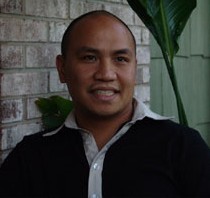
Inviting everyone to attend the one-night-only bboy poetry reading of Fil-Am poet Patrick Rosal tomorrow, November 21 (Tuesday), 8PM at mag:net, Katipunan. I will be reading with other guest readers including Asha Macam and Mookie Katigbak. See you there.
Patrick Rosal is the celebrated author of Uprock Headspin Scramble and Dive (Persea Books), finalist for the Asian-American Writers' Workshop Literary Awards and winner of the AAWW Member's Choice Award. His chapbook Uncommon Denominators won the Palanquin Poetry Series Award. His work has appeared in journals such as North American Review, Columbia, Folio, and many anthologies including The NuyorAsian Anthology, Pinoy Poetics, and The Beacon Best. He has been a featured reader at many venues around the country, in Buenos Aires, London, and on the BBC radio program "The World Today". The 2001 Emerging Writer in Residence at Penn State Altoona, he is currently Assistant Professor of English at Bloomfield College. My American Kundiman, was recently published by Persea Books in fall 2006.
-----
The Poet with His Face in His Hands
You want to cry aloud for your
mistakes. But to tell the truth the world
doesn't need any more of that sound.
So if you're going to do it and can't
stop yourself, if your pretty mouth can't
hold it in, at least go by yourself across
the forty fields and forty dark inclines
of rocks and water to the place where
the falls are flinging out their white sheets
like crazy, and there is a cave behind all that
jubilation and water fun and you can
stand there, under it, and roar all you
want and nothing will be disturbed; you can
drip with despair all afternoon and still,
on a green branch, its wings just lightly touched
by the passing foil of the water, the thrush,
puffing out its spotted breast, will sing
of the perfect, stone-hard beauty of everything.
-- Mary Oliver, from The Best American Poetry 2006 (I got a copy
yesterday from Booksale. hehe.)
Saturday, November 18, 2006
Bridport Prize 2006

Truly an honor. Many thanks to judge Lavinia Greenlaw and Bridport's Frances Everitt. Here's the Bridport Prize's updated link and here's what Ms. Greenlaw has to say about the winning poems. Awarding is tomorrow in Dorset, UK. The support has been tremendous, but I couldn't go and receive the prize myself as my daughter's currently confined and we don't know the final diagnosis yet. Anyhow, congratulations to all the winners, both for Fiction and Poetry. :)
Advanced call for submissions: Deadline for the next Bridport Prize is June 30th 2007. Judges are (wasak, wasak) Don Paterson for Fiction and Tracy Chevalier for Poetry. O nga, parang baligtad yata; dapat Paterson for Poetry and Chevalier for Fiction. Let's see if they still correct this. But that's what the Bridport Prize website says.
Thanks so much to Ms. Mons Romulo Tantoco for helping me secure my passport and to the wonderful people in the British Council for the help with the VISA. Pasensya na po talaga, di nakaalis.
Thursday, November 09, 2006
Time
Someone once said, it's been with us
since the beginning, incorruptible and blameless
as the electricity that rides the sky
and pushes the children away from the swing,
to fear then unhappiness, as they stare out
of windows like the rain will always be
their greatest bully. Nothing we do
can console them, like the small and nearby
were already the wide and friendly world,
as if outside should be swings and seesaws
and permanent sunshine. As if their whole lives
would rest on the same axis: our presence
and their resistance. Meanwhile,
we do what we can. We count the spaces
between lightning and thunder, the intervals
of rain and sun, time. So that our children,
alive with their bursting blue souls,
could once again leave us inside,
staring out of windows and growing even older.
since the beginning, incorruptible and blameless
as the electricity that rides the sky
and pushes the children away from the swing,
to fear then unhappiness, as they stare out
of windows like the rain will always be
their greatest bully. Nothing we do
can console them, like the small and nearby
were already the wide and friendly world,
as if outside should be swings and seesaws
and permanent sunshine. As if their whole lives
would rest on the same axis: our presence
and their resistance. Meanwhile,
we do what we can. We count the spaces
between lightning and thunder, the intervals
of rain and sun, time. So that our children,
alive with their bursting blue souls,
could once again leave us inside,
staring out of windows and growing even older.
Friday, November 03, 2006
Contact
To be sedated, handled with fingers,
the fear conquered and the animal harmless
like the ordinary orchids in the greenhouse,
its body just another thing to be tampered with.
I think of the young zoologist, his first time
in the field, lab work and books behind him,
hands calloused from too many chemicals.
How his body shudders now, this moment
with the animal of his wildest dreams.
It could be a lion, rhino, some poisonous snake.
It really doesn’t matter. He is caught
in this moment of pure closeness. He holds its paws,
hooves, wings, the pointed and useless fangs,
rough but firm like his grandmother’s hands,
as during that first trip to the zoo one summer,
a long time ago, before he forgot how
the sun exposes everything, alights gently
on the living, or the dead, and how everything ends up
being touched, even the fierce ones, even this animal—
for now familiar, for now almost like family.
the fear conquered and the animal harmless
like the ordinary orchids in the greenhouse,
its body just another thing to be tampered with.
I think of the young zoologist, his first time
in the field, lab work and books behind him,
hands calloused from too many chemicals.
How his body shudders now, this moment
with the animal of his wildest dreams.
It could be a lion, rhino, some poisonous snake.
It really doesn’t matter. He is caught
in this moment of pure closeness. He holds its paws,
hooves, wings, the pointed and useless fangs,
rough but firm like his grandmother’s hands,
as during that first trip to the zoo one summer,
a long time ago, before he forgot how
the sun exposes everything, alights gently
on the living, or the dead, and how everything ends up
being touched, even the fierce ones, even this animal—
for now familiar, for now almost like family.
Thursday, November 02, 2006
Poems with Crickets
Life
They made it clear from the beginning–
you were only borrowing it for a while,
and have to surrender it eventually,
like an umbrella from the neighbors after the rain.
Some, inclined to science and a mild form of pontification,
guessed life to be most likely linear, one straight path
from one moment to another, or crooked,
depending on which religion you’re looking from, and even concentric also,
like the growth of a tree’s bark, the future
containing the past in small circular hearts.
It was the really concerned ones, willing to be honest,
your mother most probably, or cousin, who said
happiness was hard to come by,
but attainable and never-ending and short.
What they didn’t tell you was that the sky overhead
was already gathering around the horizon and beautiful forever,
the grass underfoot growing around your feet
from graves. Of course you don’t have to know why.
You can always pray and sleep under trees.
What they didn’t tell you
was that you were given a body
weak to the hard elements but indestructible
as long as there was the soul chittering
like a cricket in the wide, boundless night field
outside your window, now apparently wet,
it having just rained, the neighbor’s umbrella
propped on your door, unreturned,
black with red polka dots, not your favorite color.
-- Arkaye Kierulf
Atonement
Where they are exactly, no one knows.
It is enough that they lie somewhere,
slicing the darkness with their sharp sounds.
Far off, in the cities, people are making do
with light and music and wakefulness.
Here, it is not so different. Only here,
the fireflies are satisfied with their nature,
their flickering envy of stars.
The same is true of the bullfrog,
announcing its presence by the pond,
and of the waiting owl, wide-eyed
and dark-winged and silent in the tree.
But the crickets, weak and ready
for the taking, are the boldest,
frantic with their unlinear music
as if they want to be found, as if
each singular blade of grass contains a single note,
contributes to the grand monotone of the evening.
Troubled and sleepless, I step out to look for them,
flashlight in hand. But outside there is only
the unblemished night, alive with its occasions of light,
harsh sounds, and the unseen crickets, nearby
and far away, mocking the frog, the owl, me.
As if their chorus is both for death and deliverance,
or simply because the night would be too silent
without their sacrifice. Eventually, they would
be discovered. Maybe not tonight, and maybe not
by me. This is the call of both the wild
and the human: our constant search for sources,
answers. Then again, there is the question
of God, our natural need to be heard, forgiven,
as these crickets–-noisy but perhaps
full of prayer, perhaps already redeemed.
-- Joel M. Toledo
They made it clear from the beginning–
you were only borrowing it for a while,
and have to surrender it eventually,
like an umbrella from the neighbors after the rain.
Some, inclined to science and a mild form of pontification,
guessed life to be most likely linear, one straight path
from one moment to another, or crooked,
depending on which religion you’re looking from, and even concentric also,
like the growth of a tree’s bark, the future
containing the past in small circular hearts.
It was the really concerned ones, willing to be honest,
your mother most probably, or cousin, who said
happiness was hard to come by,
but attainable and never-ending and short.
What they didn’t tell you was that the sky overhead
was already gathering around the horizon and beautiful forever,
the grass underfoot growing around your feet
from graves. Of course you don’t have to know why.
You can always pray and sleep under trees.
What they didn’t tell you
was that you were given a body
weak to the hard elements but indestructible
as long as there was the soul chittering
like a cricket in the wide, boundless night field
outside your window, now apparently wet,
it having just rained, the neighbor’s umbrella
propped on your door, unreturned,
black with red polka dots, not your favorite color.
-- Arkaye Kierulf
Atonement
Where they are exactly, no one knows.
It is enough that they lie somewhere,
slicing the darkness with their sharp sounds.
Far off, in the cities, people are making do
with light and music and wakefulness.
Here, it is not so different. Only here,
the fireflies are satisfied with their nature,
their flickering envy of stars.
The same is true of the bullfrog,
announcing its presence by the pond,
and of the waiting owl, wide-eyed
and dark-winged and silent in the tree.
But the crickets, weak and ready
for the taking, are the boldest,
frantic with their unlinear music
as if they want to be found, as if
each singular blade of grass contains a single note,
contributes to the grand monotone of the evening.
Troubled and sleepless, I step out to look for them,
flashlight in hand. But outside there is only
the unblemished night, alive with its occasions of light,
harsh sounds, and the unseen crickets, nearby
and far away, mocking the frog, the owl, me.
As if their chorus is both for death and deliverance,
or simply because the night would be too silent
without their sacrifice. Eventually, they would
be discovered. Maybe not tonight, and maybe not
by me. This is the call of both the wild
and the human: our constant search for sources,
answers. Then again, there is the question
of God, our natural need to be heard, forgiven,
as these crickets–-noisy but perhaps
full of prayer, perhaps already redeemed.
-- Joel M. Toledo
Saturday, October 28, 2006
Dusting
These things moving in wind,
we have names for them. Feather, dust,
bird. That which, now and then, urges leaves
to nudge the moveable branches. Sometimes,
we may even see their quiet collisions,
flecks of sudden and minute life
as this afternoon, sitting on the porch
and watching my wife dusting off blankets,
the sunlight gathering around her lithe body,
our children running under the swayed trees
and the startled birds, the dust swirling joyously
everywhere, celebrating their release. And I am held
in awe of the things that move in the world,
or are moved, and of the privacy of the living,
the many rising objects revealed only by refraction,
and why I just sit here, straining.
we have names for them. Feather, dust,
bird. That which, now and then, urges leaves
to nudge the moveable branches. Sometimes,
we may even see their quiet collisions,
flecks of sudden and minute life
as this afternoon, sitting on the porch
and watching my wife dusting off blankets,
the sunlight gathering around her lithe body,
our children running under the swayed trees
and the startled birds, the dust swirling joyously
everywhere, celebrating their release. And I am held
in awe of the things that move in the world,
or are moved, and of the privacy of the living,
the many rising objects revealed only by refraction,
and why I just sit here, straining.
Subscribe to:
Posts (Atom)