Two poems about dumaguete from co-fellows below. One's a lawyer now and the other's a magazine editor. Then they were just drunken buffoons.
These just bring back memories of sea and bacchanalia and hedonism. Mostly sea.
Nightlight on Breakwater
Negotiating the last port of call past midnight,
Post-conversation in a coffee shop in Pasay,
I take your white hand through an aisle
Of gaslamps bathing the vendors in orange light
Until we face an opening to the open sea,
Tossing in the world's shadow, keeping
Whole islands of countries together or tearing
Away at their edges, breaking off engagements.
Late into dark, the docks retire the whores,
Transvestites watch each other with suspicion.
Drunks huddle in a conspiracy to murder the full moon.
The policeman points his flashlight at parked lovers.
If we could ride a rented bicycle across the ocean
Morning would find us bright with sand in the Visayas
Reservations called through a seashell payphone
To a hotel whose beds we'd turn on one by one.
Maybe if I tell you all this you'd come with me.
An oil tanker slides out the harbor of heavy chains.
The captain paints small rainbows on the trail
One might follow another to Dumaguete.
-- Easy Fagela
Surfing in these Islands
The Sony of this island
is causing us some minor dilemma.
Waiting offshore are Dumaguete dolphins
and their happy sonic squeals
for the first time Costeaus:
couch potato mariners
of Discovery channel whale
and Trinitron shark fame.
But on simulcast are Misses Cuba
with her luscious Havana- pout boca,
China (Taiwan) and her mixed English maxims
of a 21st century Confucius confused,
the girl with enormous chakra
coal-dancing nails-for-a-bed India,
and Italy sleek as a Ferrari
all set to win her race the Universe.
Since Electricity it has been like this:
our eyes splashed with occasional static,
our bodies suddenly jerking to a halt.
A hot finger on the pause button of our lives.
-- Ed Geronia, Jr.
Monday, February 27, 2006
Friday, February 17, 2006
Eh Los Lobos Kaya, May Nakaisip Na?

Dang. Was looking for a good picture of chupacabras online and found out that our band's name, Los Chupacabras, is already being used by a band in the U.S.
(O nga naman, malamang nga may mas naunang nakaisip 'nun.)
Double dang because it's also the name of a friggin' frisbee team. Palit na ulet ng malupet na pangalan, mga bayaw!
By the way, ang sarap tumugtog sa U.P. Fair! Sana napanood n'yo kami.

Friday, February 10, 2006
New Century, with Dragon
Since there is little else to convince me that time moves forward
but the usual bright arcs and descents of sunlight, I am going back
to the age of dragons, the great age of stumbling into strange forests
where there are reports of knights who wield enchanted swords
that sing into the fire-bellies of fierce, gigantic beasts
and sightings of sorcerers in sudden castles looking out from towers,
scooping magic dusts from passing clouds. I wonder now,
turning the lights off and yielding to the older code of sleep,
how the years have managed to keep such fictions. I'm thinking
of uprooted trees and the elaborate paperwork. Or earlier deeds:
a young, dreamy-eyed scribe moving away from the din of medieval ballads
by the campfire into the woods, knocking quietly on the branches
and leaves. The next day, they will say he simply and understandably
lost his way. For that was also a time of faith; his companions believed
in disappearances. Tomorrow, in honor of these ancient convictions,
I will leave for some other place, somewhere with canopy and undergrowth
and many dark holes to sleep in. And I will find that man: stirring
and yawning and generally just scribbling about in that old morning
like nothing in the world could ever possibly change.
but the usual bright arcs and descents of sunlight, I am going back
to the age of dragons, the great age of stumbling into strange forests
where there are reports of knights who wield enchanted swords
that sing into the fire-bellies of fierce, gigantic beasts
and sightings of sorcerers in sudden castles looking out from towers,
scooping magic dusts from passing clouds. I wonder now,
turning the lights off and yielding to the older code of sleep,
how the years have managed to keep such fictions. I'm thinking
of uprooted trees and the elaborate paperwork. Or earlier deeds:
a young, dreamy-eyed scribe moving away from the din of medieval ballads
by the campfire into the woods, knocking quietly on the branches
and leaves. The next day, they will say he simply and understandably
lost his way. For that was also a time of faith; his companions believed
in disappearances. Tomorrow, in honor of these ancient convictions,
I will leave for some other place, somewhere with canopy and undergrowth
and many dark holes to sleep in. And I will find that man: stirring
and yawning and generally just scribbling about in that old morning
like nothing in the world could ever possibly change.
Monday, January 30, 2006
Warning: Poetry is Good for Your Health
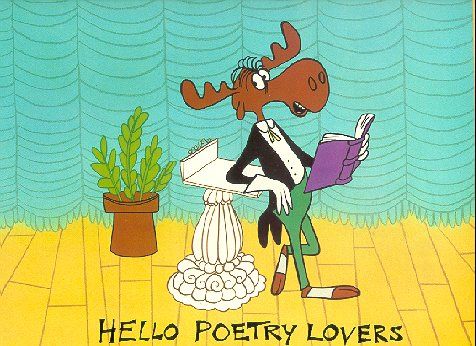
Is Poetry the New Prozac?
by Christina Patterson
27 January 2006
Poetry is good for your health. That, at least, is the premise of studies currently under way for the Arts Council and the Department of Health. One study, published a couple of years ago in the journal Psychological Reports, suggested that writing poetry boosted levels of secretory immunoglobin A. Another, undertaken by a consultant at Bristol Royal Infirmary, concluded that poetry enabled seven per cent of mental health patients to be weaned off their anti-depressants. Poetry, it seems, is not the new rock'n'roll, but the new Prozac.
This was not instantly evident at the ceremony for the TS Eliot poetry prize last week. Perhaps it was the strip-lighting, but the assembled throng of pasty faces and panda-shadowed eyes did little to foster a sense of radiant health. As feel-good events go, it ranked just above a tussle with your online tax return, but probably below a Thai takeaway in front of Celebrity Big Brother. It was, of course, not fair of Cyril Connolly to describe poets as "jackals fighting over an empty well", but it is true that £10,000 prizes do not, on the whole, boost the health and happiness of those who don't win.
The prize, in any case, went to a paean to psychosis. Carol Ann Duffy's collection of love poems, Rapture, is a moving and, at times, skin-crawlingly accurate portrayal of a process that psychologists have recently identified as a form of madness. We have all been there: tending the mobile "like an injured bird", repeating the name "like a charm, like a spell". For most of us, falling in love is a season in what Duffy calls "glamorous hell", and not a sojourn. We might suffer a few sleepless nights, or even eat a bit less than usual, but we can't sustain life at this pitch. And, luckily for us, our minds comply.
Many poets - a higher proportion, apparently, than of the average population - are not so lucky. John Clare, Anne Sexton, Robert Lowell and, most famously, Sylvia Plath, all knew the torments of a mind that would, on occasion, burst out of the crucible of what Freud called "normal human misery" into the nameless horrors of mania. The mad poet may be a cliché, but it is not a myth. Poets continue to write of their experiences of mental illness. If poetry is some kind of wonder-drug, it sure ain't working for them.
So who is making these headline-hitting assertions, and why? The answer, of course, is arts administrators, and they're doing it for money. And kindness, and the philanthropic impulse, and passion and a desire to help the lost and the lonely and the miserable and the mad. But, to do all this, you need money, and to get money you need to go to funders, and to go to funders you need studies, evidence, and results.
A current project is a good example. Poems in the Waiting Room was set up by an enthusiastic social worker eight years ago. Run, like most of these things, on a shoestring, it has had little pots of funds from trusts and foundations as well as the Arts Council, the Poetry Society and the Foreign Office. It aims are, you'd have thought, worthy and modest: to cheer up miserable places (hospital waiting rooms) at an anxious time with a little injection of art.
Their online "evaluation", however, tells a different story. Amongst a dizzying range of aims and objectives listed in its executive summary are "to gauge the external consequences of displaying poems in waiting rooms", to see "what new behaviour follows" and "what new activities". An extensive discussion of the "methodology" follows, with tables of facts and figures. The one thing, in fact, that the project doesn't allow for is for someone to read a poem and keep quiet about it. This is poetry as life-coaching. You must read and act and reach your goal. And you must do this in an act of self-improvement in which most poets, critics and readers have failed.
In a brave moment of honesty and bathos, the project's organisers assert that "the precise impact of the poems displayed... was always going to be hard to measure". The final report consists, as these things always do, of pages of anecdote masquerading as science, and ends with the hope that further funding be found. My heart went out to the organisers. Like most of us, they're simply doing their best in a league-table culture where everything is judged by results.
There is, in the right hands, a fine role for poetry as social work, but let's not pretend that it's the same as poetry as art. Poetry, like all art, is not a panacea. Perhaps it's more like homeopathy. A great placebo - some people swear by it - but the studies are inconclusive.
Thursday, January 26, 2006
Boomtown Rat
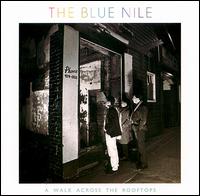
A Walk Across the Rooftops
The Blue Nile
1984
This debut album by Paul Buchanan and the rest of The Blue Nile was easily one of the more important releases to emerge from the so-called '80s new romantic scene. Most of the tracks in the album offered a novel mixture of stripped-down electronic backbeats with haunting, almost eerie melodies that complemented Buchanan's sad and heartfelt words. It has been claimed by many critics as an album way ahead of its time, primarily because the band chose to relegate to the background the screaming synths and danceable rhythms that were all the rage in that era.
While A Walk Across the Rooftops did house the popular (and danceable) new wave anthem, "Stay," most of the other songs are slow and folksy, progressing along a more soulful and introspective line. When Buchanan wails "The lights are always changing/The black and white horizon/I leave the redstone building/And walk across the rooftops..."(A Walk Across the Rooftops) or the more direct, "Do I love you? Yes, I love you. Will we always be happy-go-lucky?"(Tinseltown in the Rain), his scarred voice seems for a moment to make up all the melancholy in the world. He was no Jeff Buckley or Mark Kozelek (Red House Painters), but it probably was better that way. And this will become clear in the bands' succeeding albums, which has been hailed as two of the most important albums of the past two decades (Hats and Peace at Last, respectively).
Now with four albums under their name (the latest to be released was the again acclaimed High, in 2004), The Blue Nile have cemented their status as an important and (still) influential force in the modern rock scene.
Easter Parade
The line of traffic comes to a stand still
For the love King, out in the morning air
I find a place I started from
The wild is calling, this time I follow
Easter parade
In the bureau typewriter's quiet
Confetti falls from every window
Throwing hats up in the air
A city perfect in every detail
Easter parade
I know you, birthday cards and silent music
Paperbacks and Sunday clothes
In hallways and railway stations
Radio across the morning air
A crowd of people everywhere
And then the people, all running forward
Easter parade
Thursday, January 19, 2006
Attachments
I love how things attach themselves
to other things. The rocks sitting stubbornly
beneath a river, beards of moss.
I choose a color and it connotes sadness.
How long must the symbols remain true? Blue
is blue, not lonely. After a time, one gives up
reading the sky for shadows, even rain.
There is no promise, only a possibility.
A moment moves to another, and still it feels
the same. Like old letters in boxes,
or how the rain, at times, falls invisibly.
Finally, the things we love demand more love,
as if we have always been capable of it. Yet
I can only offer belief, mirages that mean water,
long travels that lead somewhere. I am reading
old letters, trying to make something
of what's been said. It might be raining;
some pages are unreadable.
to other things. The rocks sitting stubbornly
beneath a river, beards of moss.
I choose a color and it connotes sadness.
How long must the symbols remain true? Blue
is blue, not lonely. After a time, one gives up
reading the sky for shadows, even rain.
There is no promise, only a possibility.
A moment moves to another, and still it feels
the same. Like old letters in boxes,
or how the rain, at times, falls invisibly.
Finally, the things we love demand more love,
as if we have always been capable of it. Yet
I can only offer belief, mirages that mean water,
long travels that lead somewhere. I am reading
old letters, trying to make something
of what's been said. It might be raining;
some pages are unreadable.
Sunday, January 15, 2006
Meritage Press Holiday Poetry Contest

Arkaye's award-winning pose (hehehe)
Thanks so much to Ms. Eileen Tabios, Ms. Jean Vengua, and the people from Meritage Press. Congrats to all the winners, especially bayaw Arkaye and Kael.
From the email:
Meritage Press is delighted to congratulate the following winners for the 2005 "Babaylan Speaks" Poetry Contest, judged by Jean Vengua:
FIRST PLACE:
"Spaces" by Arkaye Velasquez Kierulf
HONORABLE MENTIONS:
"A House" by Mikael de Lara Co
"Save as Draft" by Joel M. Toledo
"APO BAKIT" by Amalia B. Bueno
SPECIAL MENTIONS:
"way /way/" by Marlon Unas Esguerra
"charmed" by Yvonne Hortillo
To see the winning poems and the Judge's Commentary, please go to the Meritage Press website.
Sobrang salamat po! :)
Saturday, January 14, 2006
The Ascension
In which the holy man carries the child
up the mountain, and the world is changed
Because in every collapse
the body is drawn into itself.
And, because the sacrifice
will lead to an understanding
of the fallen child, the prophet
climbs upward and endures the voices.
He closes his eyes,
wondering how he can just leave
everything behind: the faces of children
with their round, doomed eyes,
their hands crushing flowers, and how
the wind kept resurrecting the fallen leaves.
He trembles slightly, almost losing
his footing. There must be a lesson
to be learned here, he says to himself, even
in the resisting. Meanwhile, the path ahead
climbs upward, gives way to a certain
solitude. For this, he wept.
There are too many questions. But
this one is moving quickly toward a resolution. Surely
the weight of the world can be so natural.
But the child, the gradual loss—
He is too young, he murmurs. He is unready
for such faith, such curious display of love.
The years have softened the man,
his face marred by wisdom and diminished
strength. He ambles onward, his hands
slow and yet with each painful step,
the sky is opening for him. He thinks himself
unfairly dressed for departure, but
his people won’t have it otherwise.
The ceremony must be followed. And as his back
fades into the glare, the old man accepts his role.
He is the symbol of His age, the bearer of meaning,
the body He carries more feeble than His own:
the impossible burden of His child, a young
forgivable world.
up the mountain, and the world is changed
Because in every collapse
the body is drawn into itself.
And, because the sacrifice
will lead to an understanding
of the fallen child, the prophet
climbs upward and endures the voices.
He closes his eyes,
wondering how he can just leave
everything behind: the faces of children
with their round, doomed eyes,
their hands crushing flowers, and how
the wind kept resurrecting the fallen leaves.
He trembles slightly, almost losing
his footing. There must be a lesson
to be learned here, he says to himself, even
in the resisting. Meanwhile, the path ahead
climbs upward, gives way to a certain
solitude. For this, he wept.
There are too many questions. But
this one is moving quickly toward a resolution. Surely
the weight of the world can be so natural.
But the child, the gradual loss—
He is too young, he murmurs. He is unready
for such faith, such curious display of love.
The years have softened the man,
his face marred by wisdom and diminished
strength. He ambles onward, his hands
slow and yet with each painful step,
the sky is opening for him. He thinks himself
unfairly dressed for departure, but
his people won’t have it otherwise.
The ceremony must be followed. And as his back
fades into the glare, the old man accepts his role.
He is the symbol of His age, the bearer of meaning,
the body He carries more feeble than His own:
the impossible burden of His child, a young
forgivable world.
Cafe Ysabela Gig
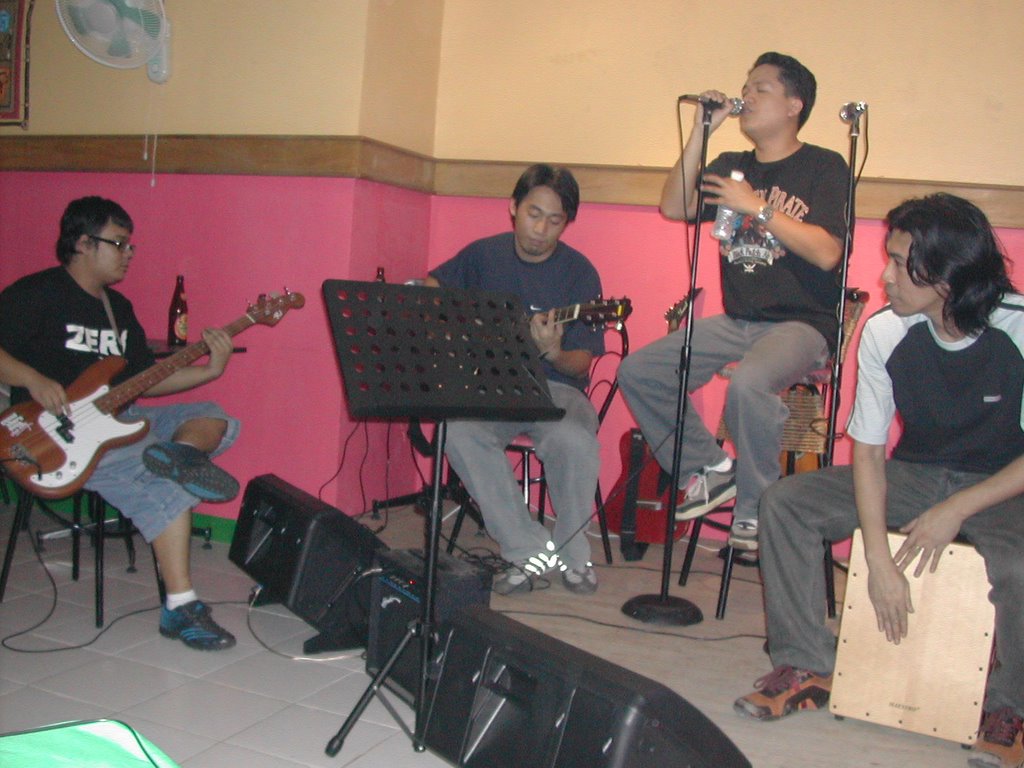


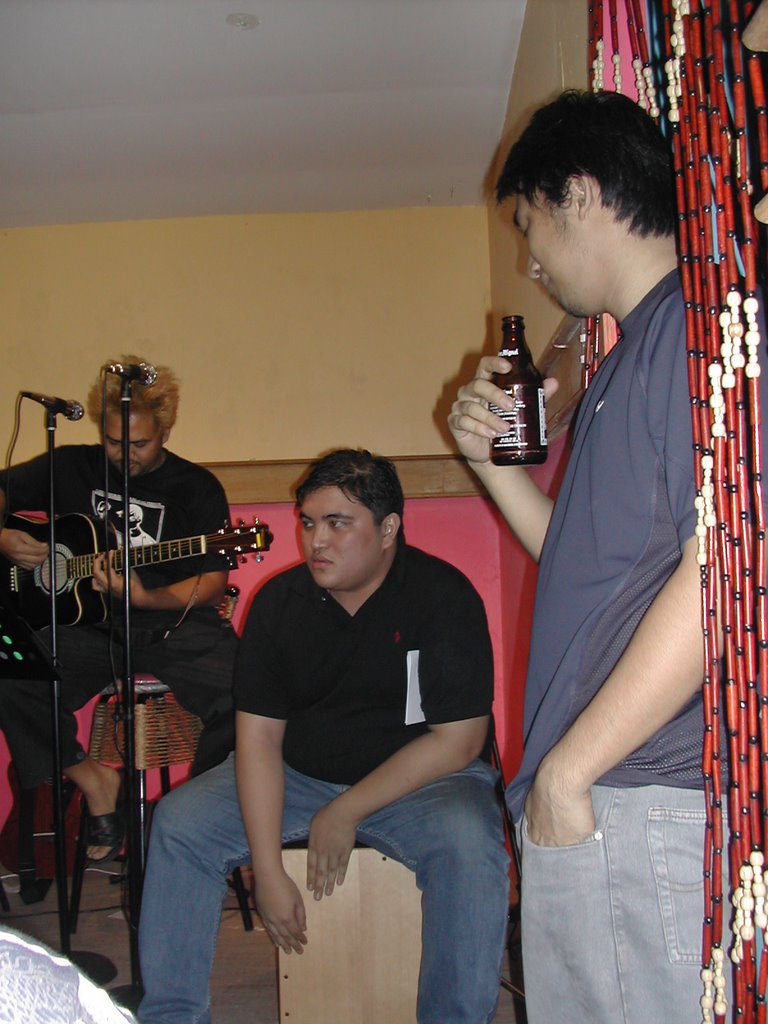
Some photos from the Los Chupacabras gig last monday in Cafe Ysabela, courtesy of sir Krip. Also, check out Paolo Manalo's tigidigging of our song, "Santa Rules" (hehe).
Friday, January 06, 2006
Balot, Pinoy
 Saan ba talaga sa tatlong kanta na ito
 lumalabas ang ating dugong maharlika?
Noypi
Bamboo
Tignan mo ang iyong palad,
kalyado mong kamay sa hirap ng buhay.
Andami mong problema nakuha mo pang ngumiti
Noypi ka nga ASTIG!
Saan ka man ka man naroroon,
huwag kang matatakot sa baril
o patalim sa bakas ng madilim
HOY! Pinoy ako! Buo aking loob, may agimat ang dugo ko
HOY! Oh Pinoy ako. May agmay ang dugo ko
Sinisid ko ang dagat, nilibot ko ang mundo.
Nasa puso ko lang pala ang hinahanap kong kulo.
Ilang beses na akong muntikang mamatay
Oh alam ko ang sikreto kaya't nandito pa't buhay.
Oh sabi nila may anting anting ako,
pero di nila alam na diyos ang dahilan ko
Dinig mo ba ang bulong ng lahi mo?
Isigaw mo kapatid ang himig natin
-----------
Pinoy Ako
Orange and Lemons
Makikita na
Ibat ibang kagustuhan ngunit iisang patutunguhan
Gabay at pagmamahal ang hanap ko
Pagbibigay ng halaga sa iyo
Nais mong ipakilala kung sino ka man talaga?
Pinoy ikaw'y pinoy
Ipakita sa mundo
Kung ano ang kaya mo
Ibang-iba ang pinoy
Wag kang matatakot
Ipagmalaki mo pinoy ako
Pinoy tayo
Ipakita mo ang tunay at kung sino ka
Mayroon masama at maganda
Wala naman perpekto
Basta magpakatotoo oohh...oohh..
Gabay at pagmamahal ang hanap mo
Pagbibigay ng halaga sa iyo
Nais mong ipakilala kung sino ka man talaga
Talagang ganyan ang buhay
Dapat ka nang masanay
Wala rin mangyayari
Kung laging nakikibagay
Ipakilala ang iyong sarili
Ano man sa iyo mangyayari
Ang lagi mong iisipin
Kayang kayang gawin
--------------
Ako'y Pinoy
Florante
Ako’y isang pinoy sa puso’t diwa
Pinoy na isinilang sa ating bansa
Ako’y hindi sanay sa wikang mga banyaga
Ako’y pinoy na mayroong sariling wika
Wikang pambansa ang gamit kong salita
Bayan kong sinilangan, hangad kong lagi ang kalayaan
Si Gat. Jose Rizal noo’y nagwika
Siya ay nagpangaral sa ating bansa
Ang hindi raw magmahal sa sariling wika
ay higit pa ang amoy sa mabahong isda
Wikang pambansa ang gamit kong salita
Bayan kong sinilangan, hangad kong lagi ang kalayaan
Ako’y isang pinoy sa puso’t diwa
Pinoy na isinilang sa ating bansa
Ako’y hindi sanay sa wikang mga banyaga
Ako’y pinoy na mayroong sariling wika
Saturday, December 31, 2005
Back
The god of the back
must be a lonely god,
god in the shape of man-headed hawk.
Long ago
a man had been sailing the river
and the hawk had been flying beside him
for days. Mornings,
the man would wake and look,
yes, there it was, dark tip-to-tip, the hawk.
His hawk, he began to think of it.
And after a time
he forgot the point of the journey,
he only woke each morning to see
if the hawk was there, to move if the hawk
moved with him, to not rest
if the hawk did not rest. And all of this love
was done in silence, between animal
and animal. There
beside him in the air and there
beside him in the water, the yoke
of the hawk. Once he had a family. Once
he had a city to go to and something
to bring back. More and more
he began to see his life
as a story the hawk was telling
holding the rat of the field in its claw, meaning
There is another world
and I will take you in it.
This
is when he became the god,
god of the back, the beautiful
brow of leaving.
-- Beckian Fritz Goldberg
Lie Wide Awake, 2005
must be a lonely god,
god in the shape of man-headed hawk.
Long ago
a man had been sailing the river
and the hawk had been flying beside him
for days. Mornings,
the man would wake and look,
yes, there it was, dark tip-to-tip, the hawk.
His hawk, he began to think of it.
And after a time
he forgot the point of the journey,
he only woke each morning to see
if the hawk was there, to move if the hawk
moved with him, to not rest
if the hawk did not rest. And all of this love
was done in silence, between animal
and animal. There
beside him in the air and there
beside him in the water, the yoke
of the hawk. Once he had a family. Once
he had a city to go to and something
to bring back. More and more
he began to see his life
as a story the hawk was telling
holding the rat of the field in its claw, meaning
There is another world
and I will take you in it.
This
is when he became the god,
god of the back, the beautiful
brow of leaving.
-- Beckian Fritz Goldberg
Lie Wide Awake, 2005
Friday, December 30, 2005
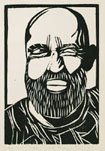
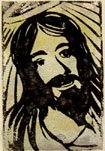
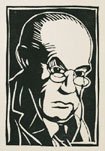
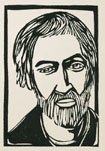
Mugshots!
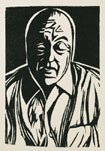
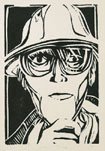
Hehe. I was googling photos of Ray Bradbury for the previous entry when I stumbled upon this site: writersmugs.com .
Game!
Kaya n'yo bang hulaan king sinu-sino ang mga manunulat sa baba nang 'di tumitingin sa website? May libreng QUESO DE BOLA sa susunod na pasko 'yung makakakuha ng lahat. AT may libreng isa pang pagkasarap-sarap na QUESO DE BOLA 'yung makakita ng one-of-these-things-is-not-like-the-others bonus question!!!! Sino 'yung naiiba?
Sige nga, sige nga!
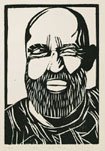


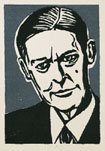
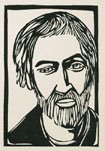


Game!
Kaya n'yo bang hulaan king sinu-sino ang mga manunulat sa baba nang 'di tumitingin sa website? May libreng QUESO DE BOLA sa susunod na pasko 'yung makakakuha ng lahat. AT may libreng isa pang pagkasarap-sarap na QUESO DE BOLA 'yung makakita ng one-of-these-things-is-not-like-the-others bonus question!!!! Sino 'yung naiiba?
Sige nga, sige nga!

Harpy New Year

"The newspapers says, says
Says it's true, it's true
And we can break through
Though torn in two
We can be one
I, I will begin again..."
--- U2, New Year's Day
Prends, plugging lang. Firstly, bili naman kayo ng Philippine Star this Sunday, New Year's Day. I've been told an essay I wrote on Ray Bradbury will come out in the lifestyle section.
Ikalawa, bili na rin kayo ng Men's Health Magazine, January issue. I've an essay on poetry plus a few nagpapaka writer, ultra poser-looking photos in borrowed Armani polo. Ahehe.
Tre, baka naman meron kayong kilala na nagtuturo o kaya'y may aklat tungkol sa pag-aaral ng salitang Italian. I really need to study it so I can defend my thesis this semester. Ilang buwan na lang ang nalalabi sa semestre eh.
Ciao! Kitakitchie!
Tuesday, December 27, 2005
Father's Lullabye
In the true idea
There is no dying
Because the world is imaginary.
If a flash of green
Foresees our sun as a splash
At least you lived among colors.
Adapt to the night
And since the world has already ended,
No need to fear each night’s sleep.
Fanny Howe
American Letters & Commentary
Issue 16
There is no dying
Because the world is imaginary.
If a flash of green
Foresees our sun as a splash
At least you lived among colors.
Adapt to the night
And since the world has already ended,
No need to fear each night’s sleep.
Fanny Howe
American Letters & Commentary
Issue 16
Friday, December 23, 2005
Boomtown Rat Redux
This week, I'm starting a retro tribute of sorts on seminal bands/artists of the past two or three decades. Mostly because I find many existing music columns incredibly self-indulgent. I think we need less of these collaged, cut-and-paste, namedrop-this-and-that band sort of thing. Let's go back to the music.
Secondly, and honestly, because I simply miss doing music reviews. Back in the mid '90s, I maintained a column called "Boomtown Rat" in the pages of the then Gokongwei-backed Manila Times. It was good while it lasted. Hay...(the faraway look, the audible sigh).
Ehem...Anyway, I'm not saying that the write-ups here will be critical reviews, really. More of "tribute" reviews just to share the poetry and music of certain bands.
So there.
Boomtown Rat
"Philosophy is a walk on slippery rocks,
Religion is a lie in the fog..."
What I Am
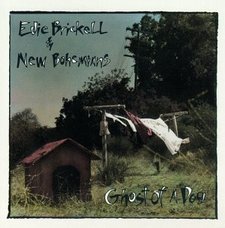
Artist: Edie Brickell and the New Bohemians
Album: Ghost of a Dog
Ghost of a Dog is Edie Brickell and the New Bohemians' follow-up to the critically-acclaimed (and much loved) first album, Shooting Rubber Bands at the Stars.
While most second albums have a high suck ratio and often plays up on the pop allures and ditties of the first, this one is immediately redeemed by the intelligent lyrics and stripped-down melody. Ghost of a Dog is easily more melancholic, subdued, and poetic.
Brickell's future hubby Paul Simon and Johhny Lydon (Sex Pistols, P.I.L.) make vocal contributions to certain songs in this album. I'll leave it to you guys to find out which ones.
Choice cuts from the album are the short, folksy ones "Oak Cliff Bra" and the title track "Ghost of a Dog" and the angry "Stwisted".
My fave track is the ballad:
Me by the Sea
I'm glad no one's here just me by the sea
I'm glad no one's here to mess it up for me
I'm glad no one's here just me by the sea
But man, I wish I had a hand to hold
I saw an orange starfish on the side of a rock
I poked on his back & tried to pull him off
A crab scared me away he ran close to my toes
And man, I wish I had a hand to hold
The moon is nowhere almost time for the sun
The voice of the waves sound anciently young
I'm a prisoner of freedom ten toes in the sand
And man, I wish I had a hand to hold
I'm in the habit of being alone
I try hard to break it I can't on my own
I'm glad no one's here just me by the sea
I'm glad no one's here to mess it up for me
I'm glad no one's here just me by the sea
Secondly, and honestly, because I simply miss doing music reviews. Back in the mid '90s, I maintained a column called "Boomtown Rat" in the pages of the then Gokongwei-backed Manila Times. It was good while it lasted. Hay...(the faraway look, the audible sigh).
Ehem...Anyway, I'm not saying that the write-ups here will be critical reviews, really. More of "tribute" reviews just to share the poetry and music of certain bands.
So there.
Boomtown Rat
"Philosophy is a walk on slippery rocks,
Religion is a lie in the fog..."
What I Am
Artist: Edie Brickell and the New Bohemians
Album: Ghost of a Dog
Ghost of a Dog is Edie Brickell and the New Bohemians' follow-up to the critically-acclaimed (and much loved) first album, Shooting Rubber Bands at the Stars.
While most second albums have a high suck ratio and often plays up on the pop allures and ditties of the first, this one is immediately redeemed by the intelligent lyrics and stripped-down melody. Ghost of a Dog is easily more melancholic, subdued, and poetic.
Brickell's future hubby Paul Simon and Johhny Lydon (Sex Pistols, P.I.L.) make vocal contributions to certain songs in this album. I'll leave it to you guys to find out which ones.
Choice cuts from the album are the short, folksy ones "Oak Cliff Bra" and the title track "Ghost of a Dog" and the angry "Stwisted".
My fave track is the ballad:
Me by the Sea
I'm glad no one's here just me by the sea
I'm glad no one's here to mess it up for me
I'm glad no one's here just me by the sea
But man, I wish I had a hand to hold
I saw an orange starfish on the side of a rock
I poked on his back & tried to pull him off
A crab scared me away he ran close to my toes
And man, I wish I had a hand to hold
The moon is nowhere almost time for the sun
The voice of the waves sound anciently young
I'm a prisoner of freedom ten toes in the sand
And man, I wish I had a hand to hold
I'm in the habit of being alone
I try hard to break it I can't on my own
I'm glad no one's here just me by the sea
I'm glad no one's here to mess it up for me
I'm glad no one's here just me by the sea

Monday, December 19, 2005
NCCA Writers Prize
Mga friends, bayaw, at hipag, ang saya. I read in the Philippine Star issue today (Monday) that I got the NCCA Writers Prize For Poetry! It's a grant of P250,000 (taxable pa) to write my first poetry book, "What Little I Know of Luminosity". This is slated for publication by the end of next year (hopefully).
Other awardees are Egay Samar for Fiction, Vim Yapan for Short Story, Danton Remoto for Translation, and Rebekah Marahombsar Alawi for Essay.
The money will be given in tranches (i.e., installments) quarterly within 2006. Formal awarding is on Feb. 24, 2006 at the NCCA's Bulwagang Leandro Locsin, in conjunction with the National Arts Month Celebration.
Congrats to the other awardees. I know you all are as excited about this as I am. :)
Other awardees are Egay Samar for Fiction, Vim Yapan for Short Story, Danton Remoto for Translation, and Rebekah Marahombsar Alawi for Essay.
The money will be given in tranches (i.e., installments) quarterly within 2006. Formal awarding is on Feb. 24, 2006 at the NCCA's Bulwagang Leandro Locsin, in conjunction with the National Arts Month Celebration.
Congrats to the other awardees. I know you all are as excited about this as I am. :)
Tuesday, December 13, 2005


Monday, December 12, 2005
Precaucion! Precaucion!
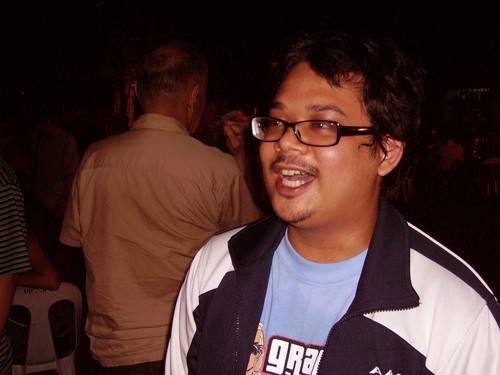

Some shots of the band from the recent Writers' Night in UP Dil.
Guess who's the most wasak Chupacabra of the night.
via Eating the Sun
Saturday, December 10, 2005
Rest Of U2 Perfectly Fine With Africans Starving
December 7, 2005 | Issue 41•49 / TheOnion.com
SAN FRANCISCO—Rock band U2, currently on tour in North America, is well-known for its human-rights advocacy, particularly its ongoing campaign to eradicate poverty in Africa. Less known to fans of the Irish supergroup, however, is that the lion's share of these efforts are made by lead singer Bono. The three other U2 members are perfectly okay with the dismal plight of Africa's poor.

The Edge, Larry Mullen Jr., and Adam Clayton.
"Yeah, that Africa stuff is Bono's thing," The Edge said. "I don't mind if he pursues other interests, but I really try to focus on the guitar riffs that give U2 its characteristic sound."
Bassist Adam Clayton, while "not opposed" to Bono's tireless efforts to improve the quality of life for impoverished Third World citizens, is apparently too busy to spearhead an anti-poverty initiative of his own.
"I was happy to help out with the Live 8 thing," said Clayton, referring to the July mega-concert benefit. "But ever since I discovered rock 'n' roll in the mid-'70s, music has been my passion, and I'd be lying if I said it was something different, like helping people."
Clayton added: "I don't have a problem with [Bono] trying to save Africa. Who knows, it might inspire some decent songs. But just as long as it doesn't interfere with the band."
In 2002, Bono started an organization called Debt, AIDS, Trade, Africa to raise awareness of the deep health and economic crises that cripple much of the continent. His fellow bandmates, however, do not lose any sleep over the debt crisis facing many African nations.
"If I could wave a magic wand and cure Africa's problems, I would do that," drummer Larry Mullen Jr. said. "But someone has to take care of the more practical, day-to-day stuff that Bono doesn't really bother with. Like, for example, how's the next album going to sound? How're we going to keep our live act fresh? I can't tell you how many millions of decisions go into making one Elevation tour."
Mullen added: "You don't win 14 Grammys feeding Africans."
In the rare moment they have free, Clayton, Mullen, and The Edge said they choose to relax and rejuvenate, without letting the plight of Africa's starving and disease-afflicted millions weigh too heavily on their minds.
"I have a garden to tend to when we're not on the road," The Edge said. "There's nothing wrong with taking care of your own little corner of the world. I work very hard in my garden."
When asked their opinion about Bono's prospects of being awarded the Nobel Peace Prize within the next year, the music-playing part of U2 could not stifle their groans.
"We had a big scare last year when [Bono's] name was put forward as the new president of the World Bank," Clayton said. "I mean, I have nothing against it, but it would just be more work for us, because we'd be left with the very challenging task of finding a new lead singer."
During live concerts, U2 audiences are treated to a stunning audiovisual experience, with Bono periodically giving his opinion on social and world events between songs. During these interludes, the rest of U2 is often conspicuously silent.
"When Bono starts telling the audience how messed up the world can be and how we should work together to make things better, I usually just zone out," Mullen said.
SAN FRANCISCO—Rock band U2, currently on tour in North America, is well-known for its human-rights advocacy, particularly its ongoing campaign to eradicate poverty in Africa. Less known to fans of the Irish supergroup, however, is that the lion's share of these efforts are made by lead singer Bono. The three other U2 members are perfectly okay with the dismal plight of Africa's poor.

The Edge, Larry Mullen Jr., and Adam Clayton.
"Yeah, that Africa stuff is Bono's thing," The Edge said. "I don't mind if he pursues other interests, but I really try to focus on the guitar riffs that give U2 its characteristic sound."
Bassist Adam Clayton, while "not opposed" to Bono's tireless efforts to improve the quality of life for impoverished Third World citizens, is apparently too busy to spearhead an anti-poverty initiative of his own.
"I was happy to help out with the Live 8 thing," said Clayton, referring to the July mega-concert benefit. "But ever since I discovered rock 'n' roll in the mid-'70s, music has been my passion, and I'd be lying if I said it was something different, like helping people."
Clayton added: "I don't have a problem with [Bono] trying to save Africa. Who knows, it might inspire some decent songs. But just as long as it doesn't interfere with the band."
In 2002, Bono started an organization called Debt, AIDS, Trade, Africa to raise awareness of the deep health and economic crises that cripple much of the continent. His fellow bandmates, however, do not lose any sleep over the debt crisis facing many African nations.
"If I could wave a magic wand and cure Africa's problems, I would do that," drummer Larry Mullen Jr. said. "But someone has to take care of the more practical, day-to-day stuff that Bono doesn't really bother with. Like, for example, how's the next album going to sound? How're we going to keep our live act fresh? I can't tell you how many millions of decisions go into making one Elevation tour."
Mullen added: "You don't win 14 Grammys feeding Africans."
In the rare moment they have free, Clayton, Mullen, and The Edge said they choose to relax and rejuvenate, without letting the plight of Africa's starving and disease-afflicted millions weigh too heavily on their minds.
"I have a garden to tend to when we're not on the road," The Edge said. "There's nothing wrong with taking care of your own little corner of the world. I work very hard in my garden."
When asked their opinion about Bono's prospects of being awarded the Nobel Peace Prize within the next year, the music-playing part of U2 could not stifle their groans.
"We had a big scare last year when [Bono's] name was put forward as the new president of the World Bank," Clayton said. "I mean, I have nothing against it, but it would just be more work for us, because we'd be left with the very challenging task of finding a new lead singer."
During live concerts, U2 audiences are treated to a stunning audiovisual experience, with Bono periodically giving his opinion on social and world events between songs. During these interludes, the rest of U2 is often conspicuously silent.
"When Bono starts telling the audience how messed up the world can be and how we should work together to make things better, I usually just zone out," Mullen said.
Friday, December 09, 2005
Bayaw Renga II
Sorry, mga bayaw, ngayon ko lang na-post. Isa-isa muna. :)
Horses nod when they neigh.
I witness this countlessly in the night.
They prance around in the darkness,
restless and affirmative, though
the lights are dimmed and my questions
are far-flung.
A yes returns at these odd times, silent
complicity and radiant noise. I cast
away my shadow: it's agreement
is too imperceptible.
The horse looks at me
and I agree.
For Billy Collins
Javie, Joel, Waps
Horses nod when they neigh.
I witness this countlessly in the night.
They prance around in the darkness,
restless and affirmative, though
the lights are dimmed and my questions
are far-flung.
A yes returns at these odd times, silent
complicity and radiant noise. I cast
away my shadow: it's agreement
is too imperceptible.
The horse looks at me
and I agree.
For Billy Collins
Javie, Joel, Waps
Subscribe to:
Posts (Atom)